Before you see the car
- Check the ad against the details. Does the price match the condition, kilometres and year?
- Do a PPSR check. For a few dollars, this tells you if there's money owing on the car or if it's been written off. Do this yourself online.
- Ask for the service history. A stamped logbook is a good sign the car's been looked after.
Inspecting the car
Walk around in good light and check:
- Body: panel gaps, mismatched paint or overspray (signs of past repair), rust, and dents
- Tyres: even tread across all four, and check the spare
- Under the car: any leaks on the ground
- Interior: wear that matches the odometer, working electrics, and the aircon (important in Brisbane)
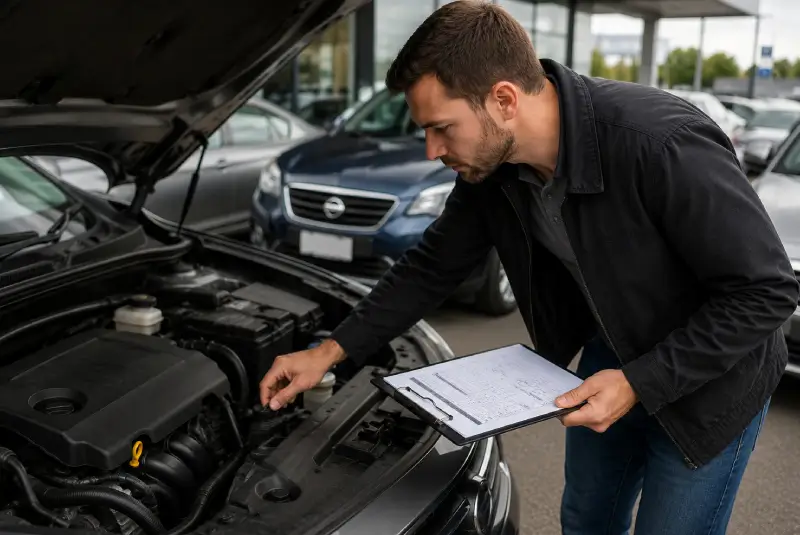
- Engine bay: oil condition, leaks, and any obvious mess
The test drive
- Start it cold if you can, cold-start problems are easier to spot
- Listen for unusual noises from the engine, brakes or suspension
- Check it pulls up straight and the brakes feel right
- Feel how it shifts, watching for slipping or jerking on autos
- Make sure it drives straight without pulling
Check the paperwork
- Safety certificate: a private seller needs to provide one to transfer the car. Confirm it's current.
- Registration: check the rego is current and matches the car.
- Identity: the VIN and engine number should match the paperwork.
Get a pre-purchase inspection
This is the step that catches what an untrained eye misses. An independent mechanic checks the car's real mechanical condition and gives you a written report. It's a small cost that can save you thousands, or hand you the facts to negotiate a lower price. We do mobile pre-purchase inspections at the seller's location, so the car is checked exactly as it's being sold.
The bottom line
Take your time, work through the checklist, and don't skip the independent inspection on a private sale. The cars that look too good to hesitate over are exactly the ones worth checking.